
For Ever Better
Philanthropy and engagement are critical to the future success of the University. Learn how you can support For Ever Better: The Campaign for the University of Rochester and brilliant minds like Elizabeth Abshire. Your generosity helps these talented postdoctoral fellows gain the experience, resources, and opportunities they need to launch independent research careers and pursue discoveries that improve lives around the world.
Fortifying the Future of Science
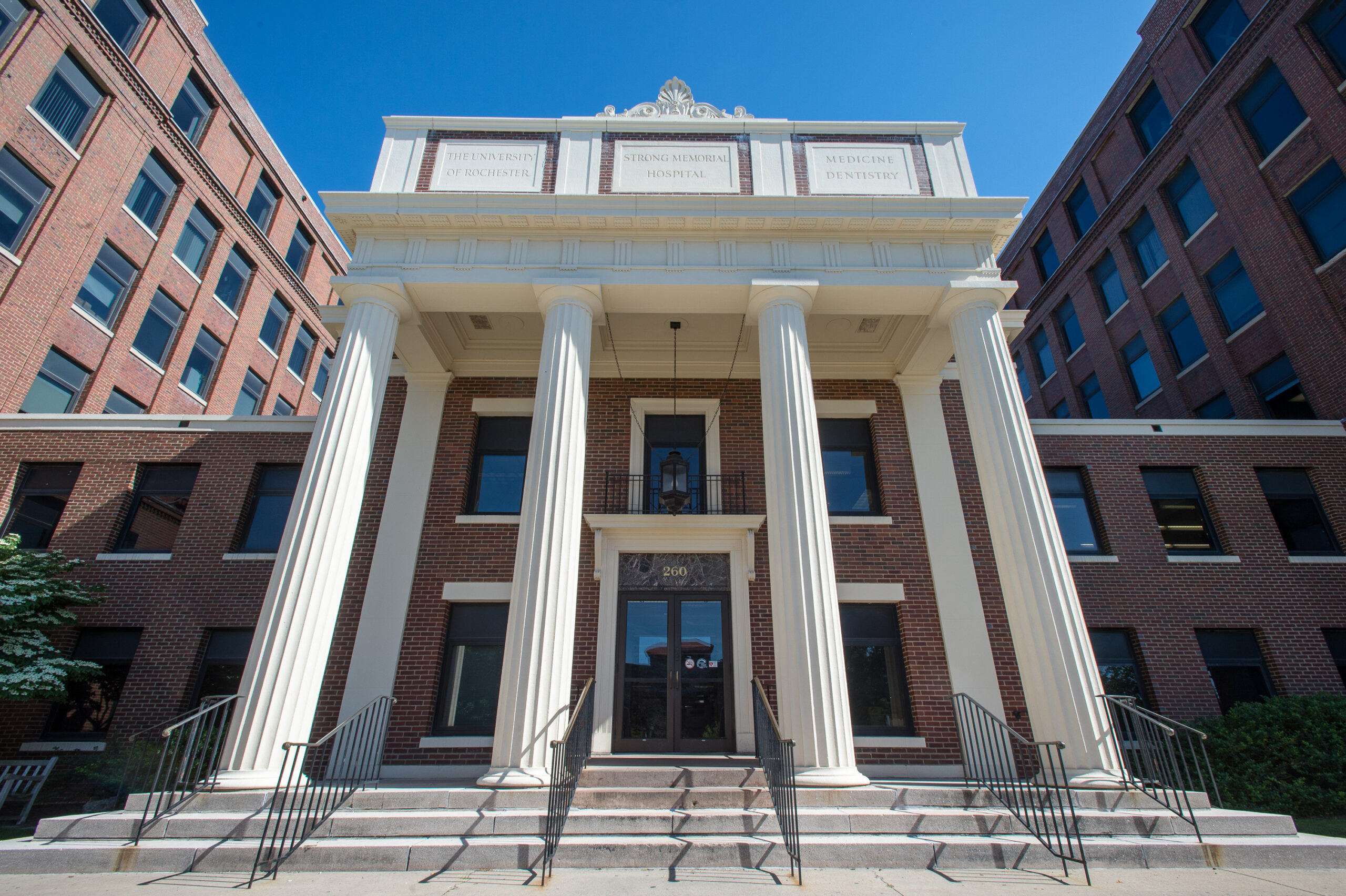
Behind every breakthrough is a scientist in training. Supporting postdocs today fuels the discoveries of tomorrow.

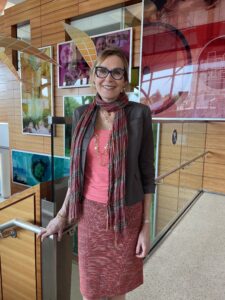
Many Saturday mornings, you’ll find Elizabeth Abshire, PhD, at Lift Bridge Yarns in Fairport, NY. She joins others from around the Rochester community for a weekly “sit and stitch” session where she knits sweaters (her favorite) and sometimes makes her own yarn on a spinning wheel. She enjoys the camaraderie and conversations with the people who gather each week and uses knitting to relax.
The casual, cozy environment is a contrast to where Abshire spends most of her time—in a laboratory at the University of Rochester Medicine where machines whir in the background and most exchanges are saved for lab meetings, seminars, and hallway or office chats. Focus is required for her work to understand how our cells adjust RNA in response to insulin, which is key to understanding diabetes and heart disease.
For the past 6 years, Abshire has worked as a postdoctoral fellow— also known as a postdoc—in the laboratory of internationally renowned RNA biologist Lynne Maquat, PhD. An unfamiliar yet hugely influential role in science, postdocs are at the bench everyday learning and pushing experiments forward…and often making new discoveries in the process.
Supporting trainees is the best investment we can make in fortifying the future of science.”-Lynne Maquat, the J. Lowell Orbison Endowed Chair and Professor in the Department of Biochemistry & Biophysics at the School of Medicine and Dentistry
“Elizabeth and her fellow post-docs are the next generation of faculty members and research leaders in our country. Through excellent mentorship and funding, we can put them on a path to success.”
Paving the way for RNA
The winner of multiple prestigious national and international awards, Maquat has spent her career deciphering the many roles that RNA plays in health and disease. Her research has brought RNA biology to the leading edge of medicine: Today, more than 100 RNA-based drugs are in development for rare diseases, cancer, and neurologic disorders.
With Maquat’s teaching and guidance, Abshire began exploring how RNA responds to insulin, which signals to our cells that energy is available. RNA influences the development of proteins that take up this energy so that cells can use it to fuel the body, build and maintain muscle and fat, and keep blood sugar in a safe range.
Understanding RNA’s intricate activity in healthy cells is key to helping us when things are broken, like in diabetes. RNA is a potential treatment target for mitigating the chronic high blood sugar that increases the risk of heart disease, kidney failure, and vision loss in patients living with the disease.
“Clinical trials are always based on findings in fundamental research. We need to figure out exactly what the molecules in our cells are doing to develop therapies,” says Maquat. “Elizabeth’s work is so important because until we understand what is going on at the most basic level, we’re shooting in the dark.”
The integral “in between” in science
After graduate students earn a PhD, they must undertake additional training before securing a faculty position and running their own lab. During this in-between period, dubbed a postdoc, trainees like Abshire work toward becoming independent scientists, conducting research, finding their own niche, and gathering data to support their ideas— all of which requires funding.
Postdocs are primarily funded by faculty members’ grants or training grants. But even a small amount of extra funding can help postdocs in major ways.
“When postdocs receive additional funding, above and beyond what their faculty advisor provides, they help support the very expensive experiments that are required to make discoveries into uncharted territory,” noted Maquat. “Exploratory research can lead to huge payoffs down the line, both in terms of scientific discovery and securing competitive grants.”
Supplemental funding also allows postdocs to travel to conferences, meet and learn from others in their field, and pay for publication fees; all things that will help them secure a faculty position at a research-intensive university and continue their work.
In Elizabeth’s case, extra funding she received early on in her postdoc training allowed her to secure a competitive NIH grant, which supported her work in the Maquat lab and will fund the work she will continue in her own lab.
Abshire is on her way to the University of Kentucky College of Medicine to begin as a full-time tenure-track assistant professor in the Department of Molecular and Cellular Biochemistry, but she will take all that she learned in Rochester—and her knitting hobby—with her.
“Sometimes I’ll ponder a scientific question while my hands are busy knitting,” says Abshire. “I think having a creative pursuit makes me a better scientist since it requires that I use my brain in a different way.”
—Emily Boynton, June 2026