The Dr. Charles and Dr. Anne Francis Endowed Autism Research Fund supports brilliant minds like practitioner and researcher Lynn Cole, DNP ʼ98N (MS), ʼ21N (DNP). We are sincerely grateful to Drs. Francis, as well as to the many other endowed fund donors whose commitment empowers our faculty and staff to advance this important work.

Endowment Report 2025
Contents
Endowed giving has long been a powerful force at the University of Rochester, and we are deeply grateful to the donors whose generosity continues to shape the University’s future. As we enter another defining moment with For Ever Better: The Campaign for the University of Rochester, your commitment stands at the heart of what makes this work possible.
Endowed gifts are fueling innovation, fostering creativity, and providing enduring support across our campuses, from music to medicine, business to big data, the arts to education, and beyond. The stories that follow highlight the lasting impact of these investments, bringing the campaign’s priorities to life through the people, programs, and places donors help sustain.
Topics on this page:
Message from President Sarah C. Mangelsdorf
Thank you
At the University of Rochester, Ever Better is more than an aspiration—it’s an action, reflected in every bold step we take. It’s a promise to create better opportunities, better outcomes, and a brighter future for all those we serve.
Our endowment is central to this pursuit, providing lasting resources that fund life-changing scholarships, inspire groundbreaking research, and bring transformative ideas to life. Your generosity allows us to invest in the people, programs, and priorities that define our institution, ensuring it remains a vibrant hub of discovery and innovation.
This year, we celebrate the significance of your support across the four areas guiding our future. Your gifts nurture brilliant minds, advancing faculty excellence, research, and innovation that move us forward. They expand boundless opportunities for our students through scholarships, experiential learning, and global engagement. They build next-generation spaces that foster collaboration and discovery. And they ensure thriving communities, benefiting the University and the broader world through meaningful initiatives that amplify our impact.
The stories that follow reveal how your partnership changes lives—from students pursuing their dreams to faculty leading breakthrough research to community members who share our mission. Your commitment reaches across our campuses, equipping us to meet the future with confidence and ambition.
On behalf of our grateful students, faculty, staff, and community, thank you for your meaningful investment in what’s to come.
Sincerely,

Sarah C. Mangelsdorf
President and G. Robert Witmer, Jr. University Professor
Brilliant minds
Levine Autism Clinic
We’re passionate about good research, but more than that, applying it in the most effective ways—breaking down barriers and creating accessibility to treatments and interventions that will help families. That’s the promise of research: turning discovery into real change for the people who need it most.”
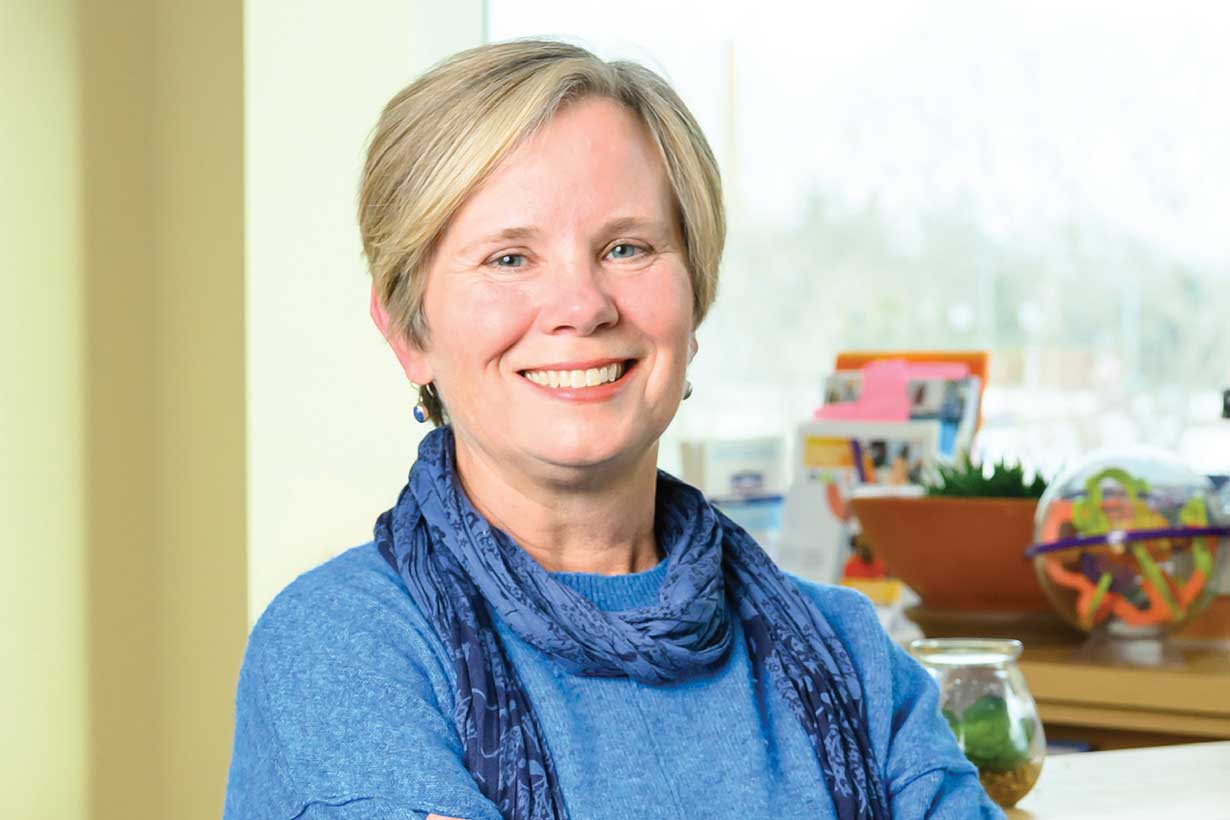
As associate division chief of the Division of Developmental & Behavioral Pediatrics at the University of Rochester Medical Center, Lynn Cole, DNP ʼ98N (MS), ʼ21N (DNP), believes deeply in the power of research. But its true value, she says, is about far more than uncovering new solutions. It’s about matching the right solution to the right patient at the right time.
“In our line of work, research is critically important,” says Cole.
Our patients are children and adolescents, and we want to ensure that the treatments we’re suggesting are the most effective and that families are getting the most out of them.”
That’s why accelerating these discoveries—and helping families gain access to the treatments and interventions that can have the greatest impact—lies at the heart of dedicated research funds, such as the Dr. Charles and Dr. Anne Francis Endowed Autism Research Fund.
“Yes, this is a research endowment, but it was intentionally designed to think about quality improvement in clinical care for children with autism and intellectual and developmental disabilities,” Cole says. “That means we have the flexibility to conduct research and also think about how we can implement that research into our care so that families can actually begin to feel that impact firsthand.”
The division, the largest developmental pediatrics center in Upstate New York, offers comprehensive care to children with developmental and behavioral disorders. As a result, its research efforts are not limited to autism alone. It encompasses a wide range of equally important topics, such as increasing access to care, bio-behavioral interventions like the efficacy of a gluten-free diet, support for caregivers under stress, and more.
Now, thanks to sustainable and reliable funding sources, like the Francis Endowed Autism Research Fund, groundbreaking research is being applied in meaningful ways, Cole says.
“What’s exciting is that these funds have given us the gift of time to dedicate to taking the evidence and applying it to our clinic. It’s allowed us to do really innovative projects that have led to improvements in care today,” she says.
“These funds are a powerful bridge between research and clinical care that is so important to the communities we serve,” Cole adds.
It’s that very belief—the inextricable link between research and community outcomes—that has Cole and her team focused on a new approach to research.
Now, through community-engaged research, community members are being consulted in the early stages of research, ensuring that the focus and the intended outcomes align with the needs of the individuals and families being served.
If there’s one thing I’ve observed over the course of my 20-year career, it’s that families are desperate to help their children. They want to give them the best developmental outcomes they can—and we want
to help them do that.”
Boundless opportunities
Eastman School of Music
Being part of an ensemble has only reaffirmed what it means to be part of something bigger than yourself, what it looks like and feels like to come together to create something beautiful. Now, maybe more than ever, people need to see that. That unity is really important to me. I’m grateful to be here at Eastman and to have been given the skills to participate and play even
a small role in that.
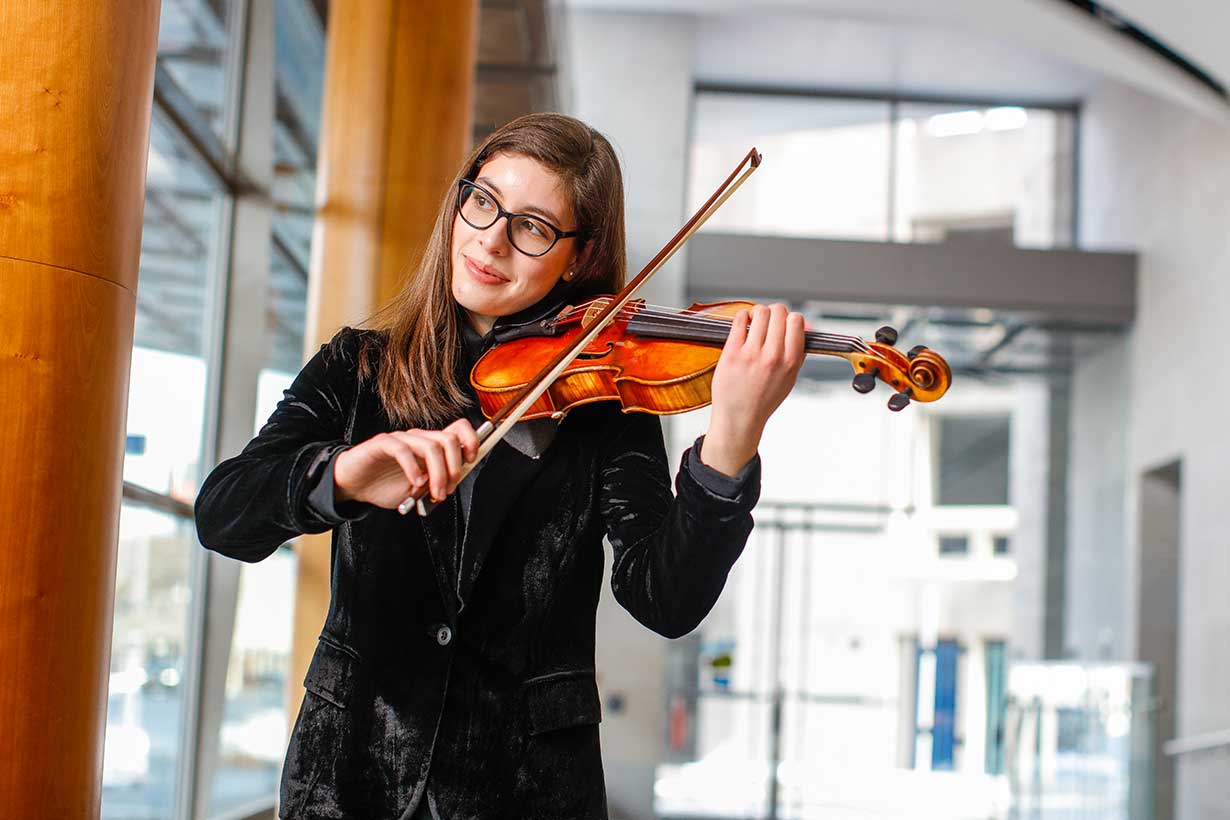
For Sofia Grimes ʼ27E, pursuing her passion as a violin performance student at the Eastman School of Music is more than an accomplishment—it’s a promise kept to her 9-year-old self.
“The year I started playing violin, I found a note I’d written years ago in my diary,” recalls Sofia, who began playing as an elementary student in her Chicago-area public school. “It said that my dream was to be a professional musician. I guess I always knew what I wanted my journey to be.”
Years of practice and honing her craft led Sofia to the Eastman School, a “full circle moment” that launched her aspirations of one day playing in a professional orchestra.
“Now, I finally have the opportunity to build the future that 9-year-old me dreamed about.”
While Sofia acknowledges the role that passion and persistence have played in bringing her dreams to life, none of it would have been possible without the support she received from the Giancarlo KF Colombo Endowed Scholarship in the Eastman School of Music and the Daniel and Nancy Robbins Endowed Violin Scholarship.
“I wouldn’t be here without my scholarships,” Sofia explains. “My family simply couldn’t afford it. I practice nearly four hours a day, and then there’s homework and my other studies. I can’t imagine having to juggle a job on top of that.”
Thanks to the generous support of her scholarship donors, Sofia has been able to immerse herself fully in the Eastman culture, not only as a student and a performer, but also by exploring every part of her identity. In addition to her participation in Eastman’s concertmaster pool, Sofia, whose mother is Argentinian, has found ways to explore the diversity of the University’s programming.
“As a Hispanic student, it was very gratifying to work at the George Walker Center at Eastman, where I had the opportunity to work alongside students with wide-ranging backgrounds and perspectives,” she says. It’s that same sense of community and inclusion that defines Eastman, something you don’t have to look far to find, she says.
“Among other top music schools, it’s not unusual to have this mentality of ‘everyone is a soloist,’ but not at Eastman. Here, there is an emphasis on collaboration that you don’t see at other places,” she says.
You can tell that Eastman students love to play together, to work as an ensemble—there’s an emphasis here on communication and partnership and teamwork that is really inspiring.”
As a junior, Sofia is still navigating what the future holds, but she can already recognize the ways Eastman has influenced her professional and personal growth.
The Giancarlo KF Colombo Endowed Scholarship in the Eastman School of Music and the Daniel and Nancy Robbins Endowed Violin Scholarship support outstanding students like Sofia Grimes ’27E. We are deeply grateful to Luigi Colombo ’81 (PhD) and Sumico Colombo ’69W (EdM), Daniel H. Robbins and Nancy Slinker Robbins, and the many endowed fund donors whose generosity opens the door to boundless opportunities for students.
Next generation spaces
Strong Memorial Hospital Emergency Department Expansion
Creating a flexible space like this, one that can evolve with the needs of our community and our patients, raises the bar,” Kamali says. “It will play a vital role in positively impacting the health of our entire region for generations to come.
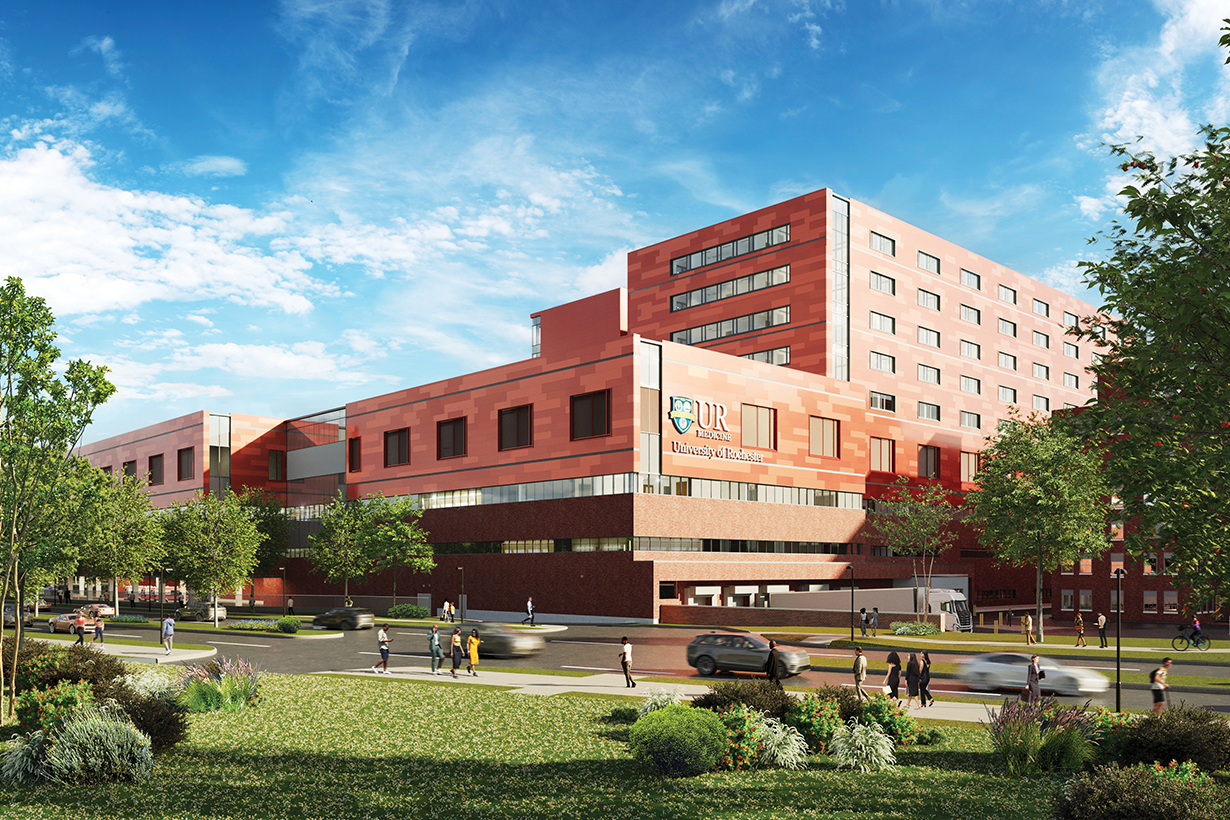
When individuals and families need urgent, life-saving care that cannot wait—whether in the middle of the night, or on a weekend—they turn to the Emergency Department. It’s this essential role in our community that underscores the critical need for an accessible, functional, well-resourced Emergency Department, according to Strong Memorial Hospital’s chair of Emergency Medicine, Dr. Michael Kamali ʼ01M (Res).
“For many individuals in our community, the Emergency Department serves as the front door to our hospital,” he says. It’s the crossroads between community and care, and in many respects, it’s the glue that holds our hospital together.”
It’s this perspective, one shared by University of Rochester leadership and community members alike, that serves as the impetus for the reimagining of Strong Memorial Hospital. Anchored by a transformational renovation of the hospital’s Emergency Department, this vision is becoming a reality thanks to generous donors like Peter J. Landers ʼ83 (MS) and Kathleen “Kathy” E. Landers ʼ82, who pledged $1 million to the Emergency Department.
Slated for completion in 2027, the new Emergency Department will nearly quadruple in size—a critical expansion driven by unprecedented demand. Since its last renovation in 2001, patient volume has surged from 65,000 to nearly 110,000 visits annually, pushing the facility far beyond its capacity. The reimagined space will serve up to 130,000 patients each year,with room to grow as needed, and will include dedicated space for psychiatric emergency care.
Beyond increased capacity, the expansion will add a cardiovascular pavilion with floors for diagnostic and treatment services, cardiac care, and inpatient rooms—all featuring private spaces that ensure patient dignity while meeting the latest standards in safety and infection control.
“It’s not just about caring for more people, which we will be able to do with ease,” Kamali says. “It’s about creating better conditions for the people who use this space—our patients and families, of course, but also the physicians, nurses, and hospital staff who are tasked with delivering this critical care.”
In the department’s current state, it’s not uncommon to see crowded waiting rooms and patient overflow into hallways, conditions that don’t allow for the privacy and dignity that patients deserve. But it’s not just the increase in space that will make the greatest difference; it’s the intentional use of it, Kamali says.
Our teams, and our patients, know how important collaboration is,” he says.
This new design will allow us to work seamlessly with other teams across the institution—trauma, stroke, pediatrics, cardiac care—to ensure patients can receive the vital services they need in one place.”
For Kamali, who serves—quite literally—on the front lines of community healthcare, this project is about more than meeting the immediate needs of Rochesterians. It’s about ensuring a healthier future long-term.
“A project of this scale and scope will undoubtedly change the face of the institution,” he says. “When you consider how many people utilize Strong Memorial Hospital, the collective expertise housed here—this is a monumental project.”
We are grateful to Peter J. Landers ʼ83 (MS) and Kathleen “Kathy” E. Landers ʼ82 for their contribution to the Strong Expansion Project to name the Adult Waiting Room for the Emergency Department. With support from the Landers and many other valued donors, the Strong Expansion Project’s Next Generation Space is becoming a reality for the Rochester community.
Thriving communities
Mt. Hope Family Center
Our center isn’t just a treasure in our community. It’s nationally and internationally recognized as a leader in helping families and children navigate the most difficult circumstances of abuse and neglect. Mt. Hope Family Center houses one of only three federally funded Centers of Excellence in child maltreatment research in the country.
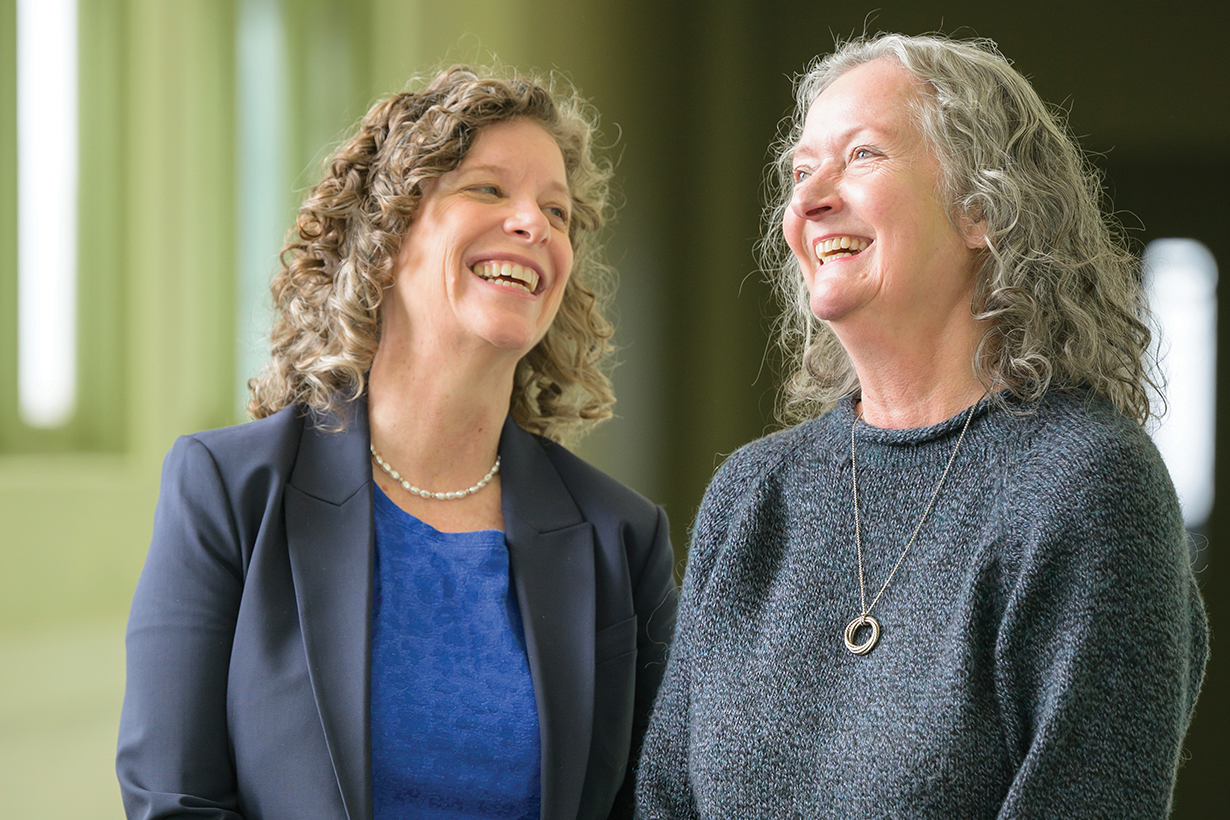
Recognized nationally and internationally as a respected center that combines scientific research, clinical services, and hands-on mentoring and training in one facility, Mt. Hope Family Center (MHFC) stands as one of the University of Rochester’s most acclaimed centers of excellence. But you won’t find it on campus among the academic buildings and offices. It’s nestled in one of Rochester’s most historic neighborhoods, squarely in the community it serves.
We’ve been a fixture in the Corn Hill community for more than 30 years. We have a reputation for being a trusted place where families can come, because our community knows and understands what we do.”
That reputation has been built and shaped over time since the center’s establishment in 1979 as a therapeutic preschool program for children affected by violence in their home or community.
Since then, MHFC has grown and evolved, supporting children and caregivers through a variety of evidence-based intervention and prevention services for families navigating parenting, familial violence, abuse, neglect, disruptions in caregiving, stressful life transitions, and systemic racism.
“Many people don’t know that the birth of an entire discipline happened here,” says Jennie Noll, PhD, Executive Director of the Mt. Hope Family Center, referencing the center’s pioneering work in developmental psychopathology.
A researcher at heart, Noll, who became executive director in 2024, was drawn to the center’s unique approach to intervention, pairing research with treatment and training to promote long-term positive impacts on community health.
“A lot of the work being done here is basic science that is translated into solutions—therapies and programs that are proven to work. ‘From cell to society,’ we say,” Noll explains, referencing the center’s wide-ranging impact from groundbreaking research to signature programs like Building Healthy Children and PATHS Afterschool and Summer Program.
But maintaining and accelerating this progress relies on more than community-centered outcomes alone, she notes. It requires a sustainable source of funding, which is why the establishment of the Mt. Hope Family Center Sheree L. Toth Imagine Fund in 2024 by Catherine Cerulli and Christopher Thomas, David R. Carlucci ’76 and Debra Carlucci, and Glover-Crask Charitable Trust marks such a pivotal moment for the center.
Toth, the former executive director of Mt. Hope Family Center, helped found and maintain the interdisciplinary subfield of developmental psychopathology—groundbreaking work that changed how researchers approach child development. Establishing an endowed fund in her honor ensures that Toth’s name will be eternally linked to Mt. Hope Family Center, while also providing a dependable source of support for its future endeavors.
“To date, much of our work has been grant funded, along with generous support from donors to help us meet current needs. But this endowment gives us something we’ve never had before—the flexibility and unrestricted funding to plan for the future,” says Noll. “In this day and age, it’s harder than ever to rely on government funding for programs like ours, and at the same time, we need flexible funding more than ever.”
Beyond its signature programs, MHFC fills vital gaps in community resources, partnering with public health departments, human services, and refugee services. The results are measurable: Social-emotional learning (SEL) programs help children and adolescents regulate emotions through play, navigate high-stress situations, lower teen pregnancy rates, and increase educational attainment.
“We go beyond reimbursable services—we’re community responsive,” she says. “We’re asking questions like ‘where are individuals falling through the cracks?’ But more importantly, we have a vitally important role: We fill the cracks.”
Continuing to address that undermet need remains vital to the health of our communities, but so too does creating a ripple effect that extends even farther beyond campus to our local and global communities.
The Mt. Hope Family Center Sheree L. Toth Imagine Fund strengthens families across Rochester. We are forever grateful to founding donors Catherine Cerulli and Christopher Thomas, David R. Carlucci ʼ76 and Debra Carlucci, and Glover-Crask Charitable Trust, along with the many donors who have followed in their footsteps, for helping our community thrive and for advancing work that serves as a model for communities beyond Rochester.
Financial Update
Thank you for your support of the University.
We are pleased to share the endowment’s fiscal year 2025 results with you. During the year, the endowment achieved a net return of 12.0%, increasing the value to $3.2 billion—an increase of more than $250 million from the prior year.
As we reflect on this strong performance, we also recognize an important leadership transition. After 25 years of dedicated service to the University as Chief Investment Officer, Doug Phillips retired from his role this past fall. We are deeply grateful for his prudent stewardship and the strong foundation he established for the endowment’s long-term success. Building on that foundation, Geoffrey Berg has assumed the role of Senior Vice President and Chief Investment Officer and is honored to continue advancing the endowment’s mission in support of the University’s future.
As you know, the endowment plays a vital role in advancing the University of Rochester’s mission to Learn, Discover, Heal, Create—and Make the World Ever Better. By providing enduring financial support, the endowment benefits current and future generations of students, faculty, and researchers. In fiscal year 2025, the endowment distributed a record $135 million to support these essential priorities.
The endowment is designed to provide stable, long-term support to the University. Achieving this goal requires a disciplined investment and spending strategy designed to support both to support faculty and students today and in the future. Through a diversified investment portfolio and prudent spending policy, the endowment seeks both to provide spending strategy to support and to grow that support over time.
Thank you for your continued partnership and support. Your generosity makes a lasting difference for the University community.

Naveen Nataraj ’97
Chair, Board of Trustees Investment Committee
Geoffrey Berg
Senior Vice President and Chief Investment Officer
Long-term investment pool
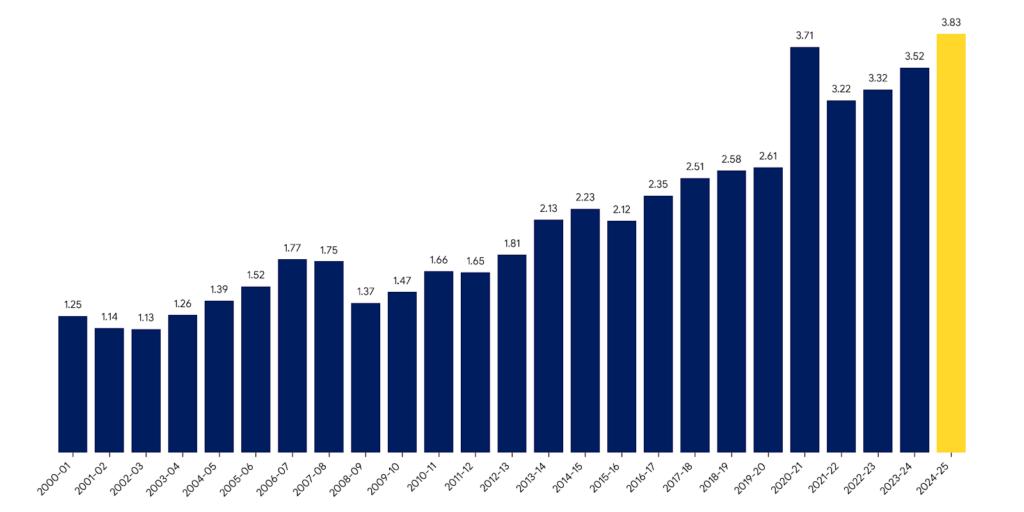
As of June 30, 2025 (fiscal year-end 2025), the University of Rochester’s Long-Term Investment Pool (LTIP) was valued at $3.8 billion. Endowed funds from the University’s programs represent approximately $3.2 billion of the LTIP. * Each fund benefits from scale and diversification of the LTIP. The University is one of 60 colleges and universities in the United States with an endowment of more than $2 billion. The LTIP’s ten-year net annual return was 8.2% versus 8.6% for the benchmark (80% stocks and 20% bonds).
Long-term investment pool value
(dollars in billions)
| Year Period | Value |
|---|---|
| 2000-01 | 1.25 |
| 2001-02 | 1.14 |
| 2002-03 | 1.13 |
| 2003-04 | 1.26 |
| 2004-05 | 1.39 |
| 2005-06 | 1.52 |
| 2006-07 | 1.77 |
| 2007-08 | 1.75 |
| 2008-09 | 1.37 |
| 2009-10 | 1.47 |
| 2010-11 | 1.66 |
| 2011-12 | 1.65 |
| 2012-13 | 1.81 |
| 2013-14 | 2.13 |
| 2014-15 | 2.23 |
| 2015-16 | 2.12 |
| 2016-17 | 2.35 |
| 2017-18 | 2.51 |
| 2018-19 | 2.58 |
| 2019-20 | 2.61 |
| 2020-21 | 3.71 |
| 2021-22 | 3.22 |
| 2022-23 | 3.32 |
| 2023-24 | 3.52 |
| 2024-25 | 3.83 |
Asset allocation and return
Rochester’s portfolio is divided into 47% traditional publicly traded assets—stocks and bonds—and 53% non-publicly traded investments, such as private equity, hedge funds, and real estate, referred to as “alternative investments.” This approach has ensured growth during economic expansions and capital preservation in economic downturns, with volatility far below the benchmark.
Major asset classes generated the following performances in fiscal year 2025 (net of fees):
Publicly traded equity generated a net return of 17.5% compared to 16.2% for the global stock benchmark.
Alternative investments generated a net return of 9.4%. Hedge funds returned 11.5%, private equity funds returned 9.6%, and real asset funds returned -4.9%.
Fixed income and cash returned 7.0% compared to the 5.9% return for the bond/cash benchmark.
Asset allocation
as of June 30, 2025:
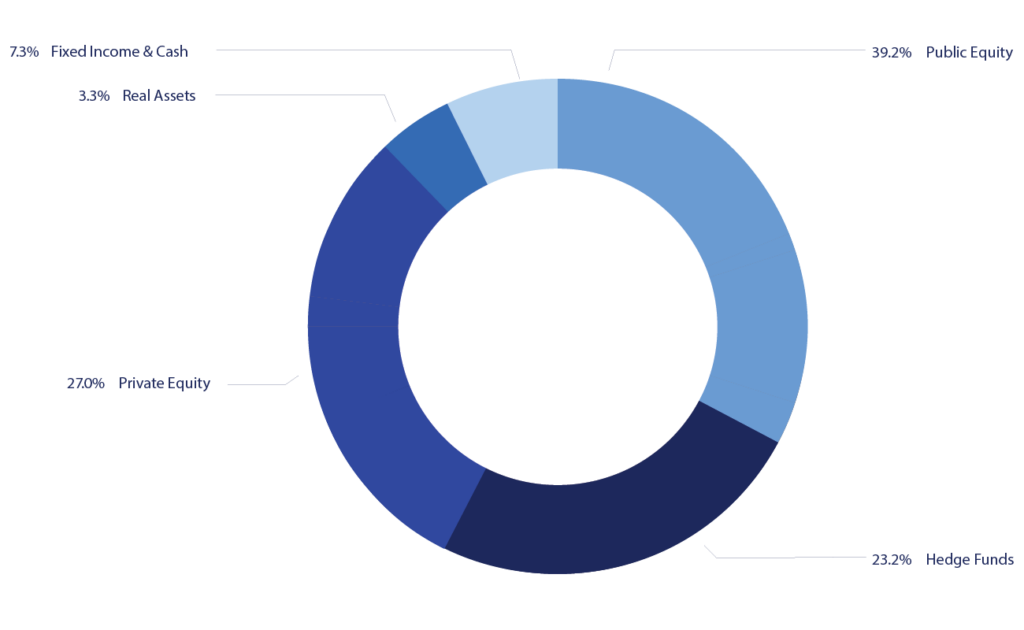
3.3% – Real Assets
7.3% – Fixed Income & Cash
23.2% – Hedge Funds
27.0% – Private Equity
39.2% – Public Equity
Long-term investment pool components
The University of Rochester Medical Center endowments comprise the largest component of the LTIP. Arts, Sciences & Engineering and the Eastman School of Music account for the next two largest components. Endowments of the Simon Business School, Warner School of Education, and the Memorial Art Gallery collectively represent about 6% of the LTIP. Approximately 6% of the LTIP represents unrestricted gifts that are designated by the Board of Trustees as permanent endowment for support of education.
The University’s endowment spending policy ensures a growing and sustainable source of revenue for the University’s departments, schools, divisions, and programs, as well as intergenerational equity for all endowment accounts. It also aligns with our peers.
The policy contains both inflation-based and market-based components. Spending rates will generally range between 4% and 6% of the 20-quarter rolling average market value
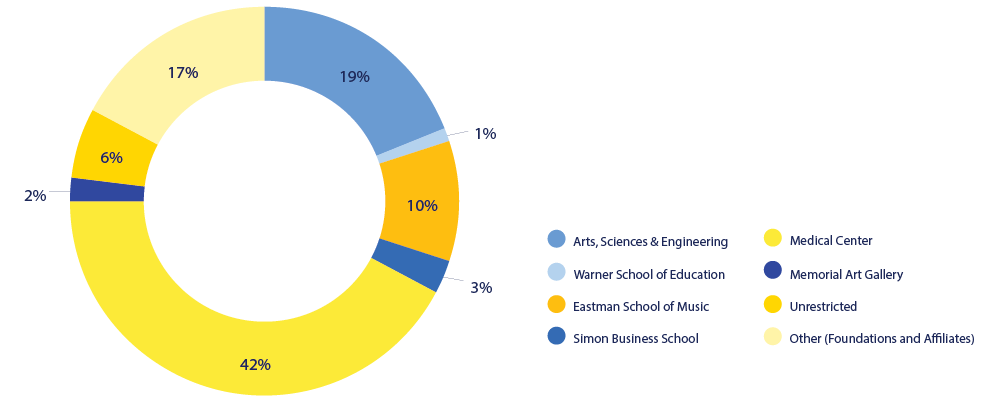
19% – Arts, Sciences & Engineering
1% – Warner School of Education
10% – Eastman School of Music
3% – Simon Business School
42% – Medical Center
2% – Memorial Art Gallery
6% – Unrestricted
17% – Other (Foundations and Affiliates)
Endowment highlights
(largest component of the LTIP) | Dollars in thousands
| Year | Endowment Market Value | Net Return | Spending |
|---|---|---|---|
| 2025 | $3,243,682 | 12.0% | $135,494 |
| 2024 | $2,989,014 | 9.5% | $127,178 |
| 2023 | $2,822,698 | 6.9% | $117,535 |
| 2022 | $2,739,187 | -11.6% | $118,928 |
| 2021 | $3,194,900 | 41.7% | $114,314 |
| 2020 | $2,328,140 | 3.7% | $110,779 |
| 2019 | $2,317,560 | 6.3% | $108,053 |
Investment committee members
As of January 1, 2026
Voting trustees
Jay S. Benet ʼ76S (MBA)
Retired Vice Chair and CFO
The Travelers Companies, Inc.
The Travelers Companies, Inc.
H. Christopher Boehning ʼ87, ʼ88 (MS)
(Ex officio)
Chair, Board of Trustees
Partner
Paul, Weiss, Rifkind, Wharton & Garrison LLP
Chair, Board of Trustees
Partner
Paul, Weiss, Rifkind, Wharton & Garrison LLP
Curtis J. Johnson ʼ88
Former Managing Director
The Carlyle Group
The Carlyle Group
Carol D. Karp ʼ74
(Ex Officio)
Vice Chair, Board of Trustees
University of Rochester
Chief Regulatory Officer
Former Prothena Biosciences Inc.
Vice Chair, Board of Trustees
University of Rochester
Chief Regulatory Officer
Former Prothena Biosciences Inc.
Amy Lesch ʼ93
Partner, Head of Global Product Strategy
KKR
KKR
Sarah C. Mangelsdorf
(Ex Officio)
President, G. Robert Witmer, Jr. University Professor
University of Rochester
President, G. Robert Witmer, Jr. University Professor
University of Rochester
Sara E. Nainzadeh ʼ00
Portfolio Manager
Verition Fund
Verition Fund
Naveen Nataraj ʼ97
(Chair)
Co-Head of Investment Banking, US
Evercore
Co-Head of Investment Banking, US
Evercore
Ria Nova ʼ98
Partner, Client and Product Solutions,
Apollo Global Management
Apollo Global Management
Steven F. Piaker ʼ84
Co-founder and Managing Partner,
Ten Coves Capital
Ten Coves Capital
Tyler Zachem ʼ88
Chief Executive Officer, Founder
Broad Sky Partners
Broad Sky Partners
Emeritus trustees
Roger B. Friedlander ʼ56
Retired Business Executive
Robert B. Goergen ʼ60
Founder and President
The Ropart Group
The Ropart Group
Edmund A. Hajim ʼ58
Chair
HighVista Strategies LLC
HighVista Strategies LLC
Michael E. Jones ʼ76
Chief Investment Strategist
High Probability Advisors
High Probability Advisors
Robert J. Keegan ʼ72S (MBA), ʼ10S (Honorary)
Retired Business Executive
Louis G. Lange ʼ70, MD, PhD
General Partner
Asset Management Ventures
Asset Management Ventures
Robert M. Osieski ʼ77, ʼ78S (MBA)
Retired Managing Director
J.P. Morgan
J.P. Morgan
Michael S. Rosen ʼ82, ʼ83S (MBA)
Co-Chair and Chief Executive Officer
Context Capital Management, LLC
Context Capital Management, LLC
Ralph R. Whitney, Jr. ʼ57, ʼ73S (MBA)
Chair Emeritus
Hammond, Kennedy, Whitney & Co.
Hammond, Kennedy, Whitney & Co.
Janice M. Willett ʼ78S (MBA)
Retired Editor
The Boston Consulting Group
The Boston Consulting Group
Alumni ex officio members
Pramit Jhaveri ʼ87S (MBA)
Board of Trustees,
Senior Advisor,
Premji Invest and PJT Partners
Senior Advisor,
Premji Invest and PJT Partners
Richard T. Miller ʼ91S (MBA)
Group Managing Director
TCW Direct Lending Group
TCW Direct Lending Group
Daniel M. Ng ʼ89S (MBA)
Retired Business Executive
Paul E. Singer ʼ66, ʼ17 (Honorary)
Founder, President, Co-Chief Executive Officer,
Co-Chief Investment Officer
Elliott Investment Management L.P.
Co-Chief Investment Officer
Elliott Investment Management L.P.
Ethical investment advisory committee members
The University’s Ethical Investment Advisory Committee (EIAC) consists of faculty, staff members, and undergraduate and graduate students. EIAC’s purpose is to identify areas of potential concern and investigate the consonance of the University’s investment policies and values. Where appropriate, EIAC makes recommendations to the Board of Trustees’ Investment Committee regarding particular investments, communications, and proxy votes.
Dan Apfel
University alumnus ʼ05
Elijah Bader-Gregory
Undergraduate student, ʼ26
Geoffrey Berg
(Ex Officio)
Senior Vice President and Chief Investment Officer
Senior Vice President and Chief Investment Officer
Karen Berger
(Chair)
Associate Professor of Instruction,
Department of Earth and Environmental Sciences
Associate Professor of Instruction,
Department of Earth and Environmental Sciences
Dr. David Diamond ʼ78 MD
Professor of Urology and Pediatrics
Steve Groves ʼ05S (MBA)
(Ex Officio)
Senior Investment Officer
Senior Investment Officer
Jack Mottley
Associate Professor of Electrical and Computer Engineering
Aditya Ranjan
Graduate student, ʼ28
Molly Snyder
Project Manager
University IT
University IT
Donor Engagement Office
Larry and Cindy Bloch Alumni and Advancement Center
P.O. Box 278710 | Rochester, NY 14627 | (585 ) 273 – 2700
If you have questions about this report, please contact Leslie Zornow, Executive Director of Donor Engagement leslie.zornow@rochester.edu