Creating lasting change through prevention, intervention, and partnership
Our center isn’t just a treasure in our community. It’s nationally and internationally recognized as a leader in helping families and children navigate the most difficult circumstances of abuse and neglect. Mt. Hope Family Center houses one of only three federally funded Centers of Excellence in child maltreatment research in the country.
–Jennie Noll, PhD Executive Director, Mt. Hope Family Center
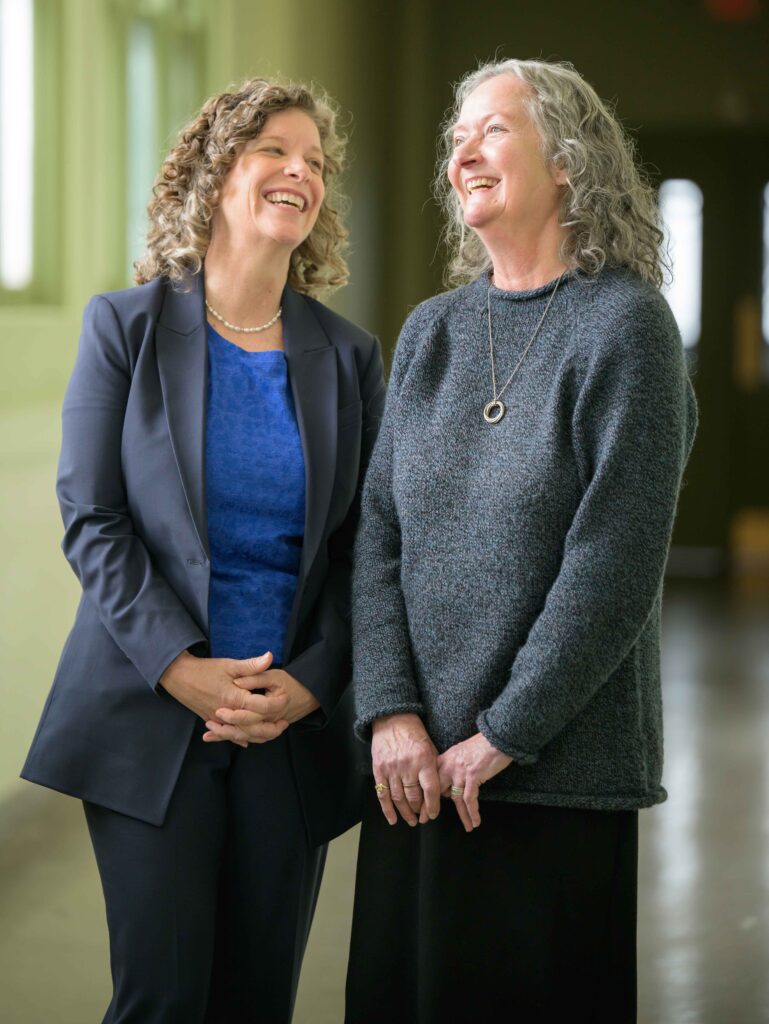
Jennie Noll, PhD, Professor of Psychology and Executive Director of Mount Hope Family Center, and Sheree Toth, Research Professor of Psychology and former Executive Director of Mt. Hope Family Center.
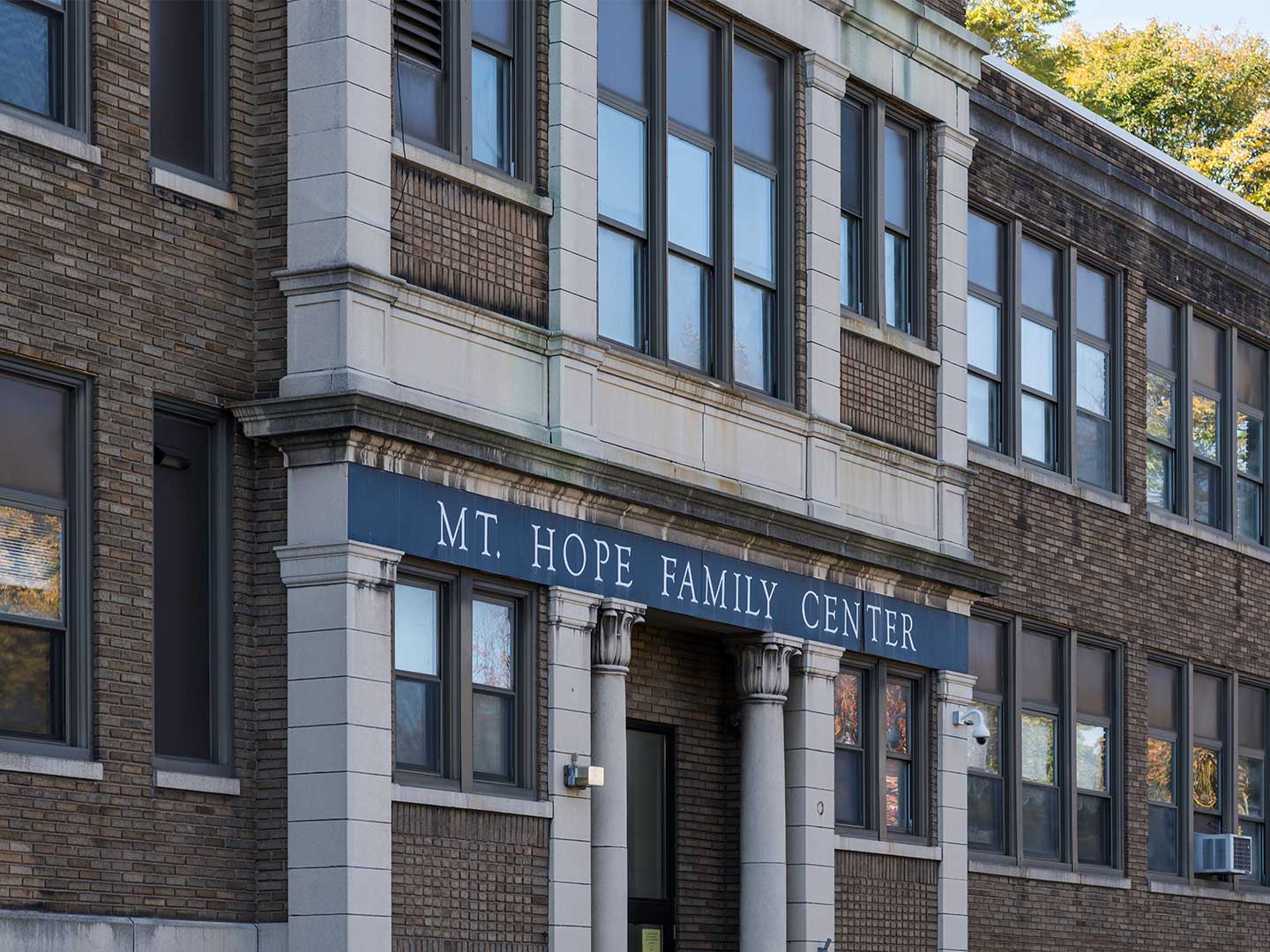
Recognized nationally and internationally as a respected center that combines scientific research, clinical services, and hands-on mentoring and training in one facility, Mt. Hope Family Center (MHFC) stands as one of the University of Rochester’s most acclaimed centers of excellence. But you won’t find it on campus among the academic buildings and offices. It’s nestled in one of Rochester’s most historic neighborhoods, squarely in the community it serves.
We’ve been a fixture in the Corn Hill community for more than 30 years. We have a reputation for being a trusted place where families can come, because our community knows and understands what we do.”
That reputation has been built and shaped over time since the center’s establishment in 1979 as a therapeutic preschool program for children affected by violence in their home or community.
Since then, MHFC has grown and evolved, supporting children and caregivers through a variety of evidence based intervention and prevention services for families navigating parenting, familial violence, abuse, neglect, disruptions in caregiving, stressful life transitions, and systemic racism.
“Many people don’t know that the birth of an entire discipline happened here,” says Jennie Noll, PhD, Executive Director of the Mt. Hope Family Center, referencing the center’s pioneering work in developmental psychopathology.
A researcher at heart, Noll, who became executive director in 2024, was drawn to the center’s unique approach to intervention, pairing research with treatment and training to promote long-term positive impacts on community health.
“A lot of the work being done here is basic science that is translated into solutions—therapies and programs that are proven to work. ‘From cell to society,’ we say,” Noll explains, referencing the center’s wide-ranging impact from groundbreaking research to signature programs like Building Healthy Children and PATHS Afterschool and Summer Program.
But maintaining and accelerating this progress relies on more than community-centered outcomes alone, she notes. It requires a sustainable source of funding, which is why the establishment of the Mt. Hope Family Center Sheree L. Toth Imagine Fund in 2024 by Catherine Cerulli and Christopher Thomas, David R. Carlucci ’76 and Debra Carlucci, and Glover-Crask Charitable Trust marks such a pivotal moment for the center.
Toth, the former executive director of Mt. Hope Family Center, helped found and maintain the interdisciplinary subfield of developmental psychopathology—groundbreaking work that changed how researchers approach child development. Establishing an endowed fund in her honor ensures that Toth’s name will be eternally linked to Mt. Hope Family Center, while also providing a dependable source of support for its future endeavors.
“To date, much of our work has been grant funded, along with generous support from donors to help us meet current needs. But this endowment gives us something we’ve never had before—the flexibility and unrestricted funding to plan for the future,” says Noll. “In this day and age, it’s harder than ever to rely on government funding for programs like ours, and at the same time, we need flexible funding more than ever.”
Beyond its signature programs, MHFC fills vital gaps in community resources, partnering with public health departments, human services, and refugee services. The results are measurable: Social-emotional learning (SEL) programs help children and adolescents regulate emotions through play, navigate high-stress situations, lower teen pregnancy rates, and increase educational attainment.
We go beyond reimbursable services—we’re community responsive, she says. We’re asking questions like ‘where are individuals falling through the cracks?’ But more importantly, we have a vitally important role: We fill the cracks.”
Continuing to address that undermet need remains vital to the health of our communities, but so too does creating a ripple effect that extends even farther beyond campus to our local and global communities.
The Mt. Hope Family Center Sheree L. Toth Imagine Fund strengthens families across Rochester and helps our community thrive.
Philanthropy and engagement are critical to the future success of the University. Support For Ever Better: The Campaign for the University of Rochester and make a difference in the lives of children. To explore a variety of giving options, contact Jenna Hiller, director of advancement.